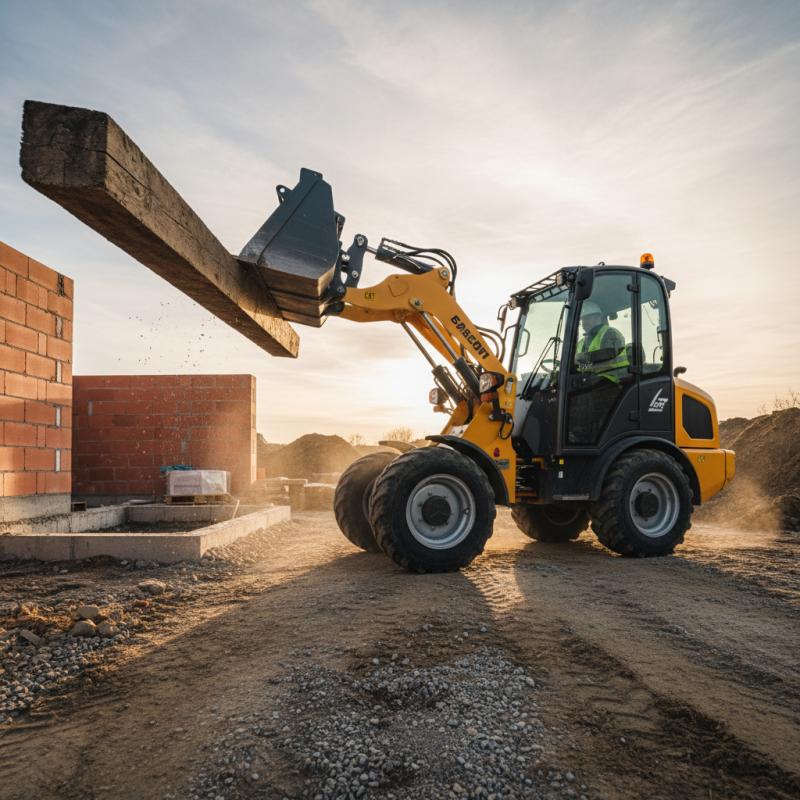
What is a Compact Wheel Loader and How Does It Work?
A Compact Wheel Loader is a versatile machine. It's designed for various tasks in tight spaces. These machines are smaller than traditional loaders but pack a lot of power. They can perform lifting, loading, and digging effectively.
Despite their size, Compact Wheel Loaders can handle substantial weights. They navigate easily on construction sites, farms, or landscaping projects. Their mobility allows for precise operations. However, operators must be skilled to maximize their potential. Some may struggle to adapt to the loader's control systems.
Understanding how a Compact Wheel Loader works is crucial. The synergy of its hydraulic system and engine enables efficient functioning. Yet, users should reflect on maintenance needs. Neglecting this can lead to performance issues. Proper training and care can enhance productivity and lifespan.
What is a Compact Wheel Loader?
A compact wheel loader is a versatile machine commonly used in construction and landscaping. It combines the functionality of a loader with a smaller footprint, making it ideal for tight spaces. These machines typically weigh between 4,000 and 8,000 pounds. They can lift materials up to 1 ton and often feature a bucket width of 5 to 7 feet.
The industry report from the Association of Equipment Manufacturers indicates that the market for compact wheel loaders has seen steady growth. The global demand is projected to reach $1.5 billion by 2025. Many operators appreciate their ability to maneuver in congested urban environments. However, some users note challenges with lifting heavy loads when working on uneven terrain.
While compact wheel loaders excel in flexibility, their limited size can be a disadvantage. They may struggle with very demanding tasks or when heavy materials need to be moved. Maintenance can also be tricky, as compact machines often require frequent checks. Small operators might underestimate the importance of routine care. This can lead to reduced efficiency or unexpected downtime.
Compact Wheel Loader Performance Comparison
Key Features of Compact Wheel Loaders
Compact wheel loaders are efficient machines designed for various tasks in construction and landscaping. These loaders excel in confined spaces due to their smaller size. Often, they can operate where larger equipment cannot. The ability to maneuver in tight spots makes them a favorite for site preparation.
Key features of compact wheel loaders include their strong lifting capacity and versatility. Many models can lift loads of up to 2,500 lbs. This strength is crucial for moving materials like dirt and gravel.
The attachments available enhance their functionality. From buckets to forks, each attachment allows for specialized tasks. A report from the Association of Equipment Manufacturers states that demand for these loaders increased by 15% in the last year alone.
Operator comfort is another important aspect. Many models include ergonomic controls and spacious cabins. This ensures operators can work efficiently without straining. However, some machines may lack sufficient visibility, which can lead to safety concerns. Additionally, while they are fuel-efficient, some users report that maintenance can be more complex than anticipated. This can result in higher operational costs over time. Understanding these factors is crucial for effective usage in various applications.
How Compact Wheel Loaders Operate Mechanically
Compact wheel loaders are versatile machines used in various sectors. Their operation involves a combination of hydraulic systems and mechanical components. The engine powers a hydraulic pump, which feeds fluid to hydraulic cylinders. These cylinders control the lifting and tilting of the bucket. As reported by industry experts, over 50% of construction sites utilize compact wheel loaders due to their efficiency.
The wheeled design of these loaders offers significant mobility. They can navigate tight spaces that larger machines cannot. However, this mobility sometimes comes at a cost. Some operators report challenges with stability when fully loaded. The center of gravity can shift, leading to tipping risks on uneven terrain. Reports show that proper training can mitigate such dangers.
Understanding mechanical operation is crucial for efficiency. Regular maintenance ensures all hydraulic components function properly. Reports indicate that neglected maintenance can reduce machine lifespan by up to 30%. Operators must be aware of signs of wear and tear. Awareness of these details is key for safe and effective operations in the field.
The Efficiency of Compact Wheel Loaders in Construction
Compact wheel loaders are versatile machines used widely in construction. Their compact size allows them to maneuver in tight spaces, making them ideal for urban sites. These loaders can efficiently lift, load, and move materials like dirt and gravel. With a strong hydraulic system, they can handle heavy loads with ease.
Efficiency is a key advantage of compact wheel loaders. They consume less fuel than larger machines, reducing operational costs. Their ability to attach various tools increases productivity. For instance, switching between a bucket and a fork only takes a few minutes. This adaptability saves time and enhances site efficiency.
Tips: Always check the machine's maintenance before starting work. Keeping it in good condition improves performance. Familiarize yourself with the loader’s controls to minimize mistakes. Practice makes perfect in operating such machinery, which can save time in the long run.
Applications and Industry Use Cases for Compact Wheel Loaders
Compact wheel loaders are versatile machines widely used across various industries. They excel in construction, landscaping, agriculture, and municipal applications. According to recent industry reports, the global compact wheel loader market is projected to reach USD 1.3 billion by 2025, growing at a CAGR of 4.1%. This growth highlights their importance in efficient material handling.
In construction, compact wheel loaders move materials swiftly. They can transport soil, gravel, or debris on job sites. Their size allows access to tight spaces, unlike larger machines. Many operators appreciate this size for better maneuverability. In landscaping, these loaders assist in tasks like grading and hauling. Despite their effectiveness, they can struggle with heavy lifting in specific situations. Operators need training for optimal performance.
Agriculture also benefits from compact wheel loaders. They help in loading feed, moving bales, and more. Municipalities utilize them for snow removal and road maintenance. However, users sometimes overlook maintenance needs, impacting efficiency. Regular checks are crucial to avoid costly downtime. Despite these challenges, the adaptability of compact wheel loaders makes them invaluable in various sectors.
What is a Compact Wheel Loader and How Does It Work? - Applications and Industry Use Cases for Compact Wheel Loaders
| Application | Industry | Load Capacity (lbs) | Engine Power (HP) | Key Features |
| Material Handling | Construction | 5,000 | 65 | Compact size, maneuverability |
| Site Preparation | Landscaping | 4,500 | 55 | Versatile attachments, agility |
| Snow Removal | Municipalities | 6,000 | 70 | Powerful hydraulics, snow plow compatible |
| Agricultural Tasks | Agriculture | 5,200 | 60 | High lifting height, compact design |
| Debris Cleanup | Waste Management | 4,800 | 65 | Quick attach system, versatility |
 +49 (0) 3722 59863-0
 sale@acutekcnc.com